Practical Interior Solutions for Homes with Limited Natural Light
Homes with limited natural light can sometimes feel smaller, darker, or less inviting than they actually are. However, a lack of windows or direct sunlight does not mean a home has to feel gloomy. Even dark areas can be bright and comfortable with careful interior planning, appropriate colors, reflective surfaces, layered lighting, and well-chosen furniture.
A well-designed interior is concerned with enhancing the flow of light in the house and providing visual warmth. Collaborating with an interior designer in delhi can assist homeowners to find viable solutions to illuminate darker rooms without interfering with functionality or personal style.
Choose a Light and Reflective Color Palette
Color has a major influence on how bright a room appears. Available light can be absorbed by dark walls and heavy finishes, which make an already small room even smaller.
An interior designer delhi ncr may recommend soft whites, warm neutrals, pale beige, light gray, or muted pastel shades for walls and ceilings. These colors are more reflective of the available light and provide a brighter visual environment without making the space look stark.
Use Mirrors to Multiply Available Light
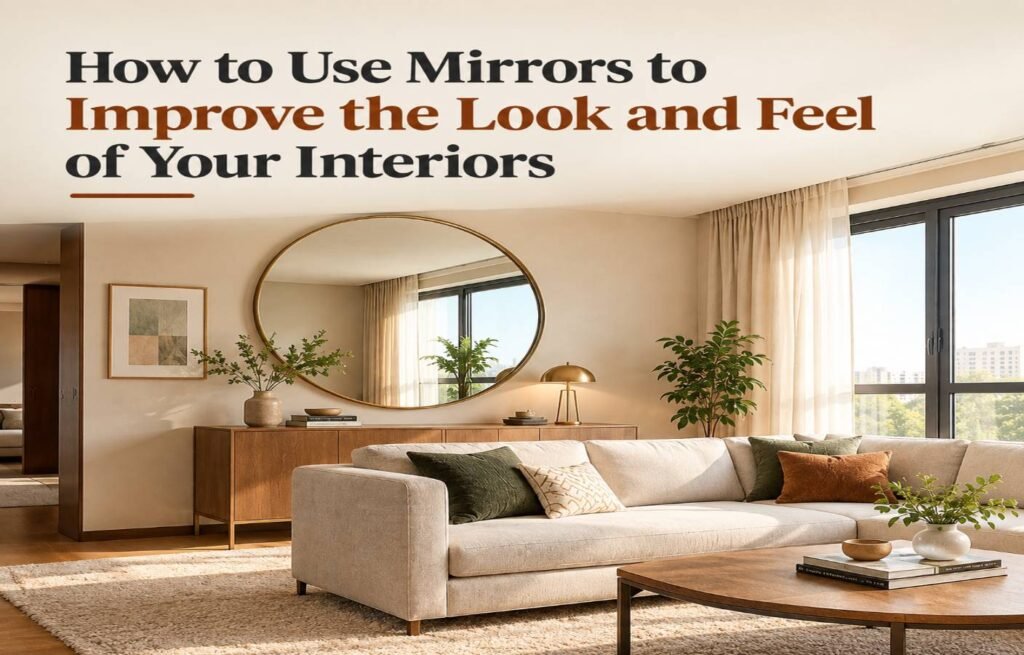
One of the easiest ways of enhancing the look of a dark room is through the use of mirrors. Mirrors can be strategically placed to reflect the light of windows, lamps and other reflective surfaces within the space.
Even big wall mirrors may produce the effect of increased depth, and small rooms may be made to appear larger. Mirror cabinet doors and ornamental reflective panels may offer the same advantages but also offer functionality.
Layer Different Types of Lighting
Using one ceiling light can cause a dark room to look flat and uncomfortable. Layered lighting is more flexible and offers a more balanced environment.
General lighting should be used as ambient lighting, task lighting used when performing a task like reading or working, and accent lighting to emphasize artwork or architectural elements. Interiors can be welcoming even when the daylight is minimal with warm and well distributed lighting.
Keep Window Areas Unobstructed
The little natural light can be blocked by furniture, heavy curtains and ornamental objects unintentionally. The size of windows must be as large as possible to make the most of daylight.
An interior designer in delhi ncr can help homeowners choose slim furniture arrangements and lightweight window treatments that preserve incoming light. Sheer curtains can be effective as they provide privacy without blocking daylight fully.
Incorporate Glass and Transparent Elements
Glass enables light to pass through spaces and create a feeling of distance. Glass doors, partitions, and furniture can assist in distributing the available light in a home.
Frosted or textured glass is useful in cases where one requires privacy, whereas clear glass can be used to the maximum to open up the visuals. Glass tables and acrylic furniture may also help to lighten up darker interiors.
Select Furniture with Lighter Finishes
Dark-colored upholstered furniture and furniture with large profiles will absorb light and make rooms look more congested. Choosing lighter fabrics, pale wood finishes, and streamlined silhouettes creates a brighter visual effect.
Furniture must also be arranged in such a way that it does not obstruct windows or significant light directions. Raised furniture with visible floor space can make smaller rooms feel more open.
Add Light-Colored Flooring
Flooring takes up a significant visual space, and thus an important aspect to consider when in darker homes. Available light can be reflected with the help of light wood, neutral tiles, pale stone, and soft-colored rugs.
An interior designer delhi can match flooring with walls, furniture, and lighting to form a unified palette. The use of a uniform color scheme will assist in avoiding a sense of visual fragmentation of darker areas.
Avoid Visual Clutter
Dark rooms can be even smaller and more confined by clutter. Maintaining surfaces clean enables the available light to circulate visually in the space.
In-built storage, hidden cabinets, and versatile furniture can assist in keeping the place clean. A well-arranged room tends to be lighter and more open, even in the cases when there is not much natural light.
Create a Consistent Visual Flow
In the case of multiple rooms with limited daylight, a consistent design language will ensure that the home does not feel out of place. The use of similar colors, materials and lighting temperatures can also be used to make the transition between spaces smoother.
Hiring an interior designer delhi ncr can be especially helpful in organizing these aspects within the house. Coherence enables darker spaces to seem like purposeful elements of the overall design instead of isolated spaces.
Consider Smart Lighting Controls
The lighting systems of today can transform dark homes into flexible ones during the day. Homeowners can switch the mood based on various activities with dimmable fixtures, automated schedules, and adjustable color temperatures.
Work and cleaning can be facilitated by brighter settings, whereas a relaxed evening atmosphere can be achieved by warmer and softer settings. Smart controls also enhance the efficiency of energy consumption when lighting is used wisely.
Conclusion
Even houses that do not have much natural light can be bright, spacious, and friendly with the appropriate interior plan. Light colors, mirrors, layered lighting, reflective finishes, glass elements, streamlined furniture and considerate storage can greatly enhance the feel of darker spaces. The goal is not to imitate natural daylight completely but to use design intelligently to make the most of every available source of light.
Ready for clearer vision? Book your appointment today with our expert eye care team!