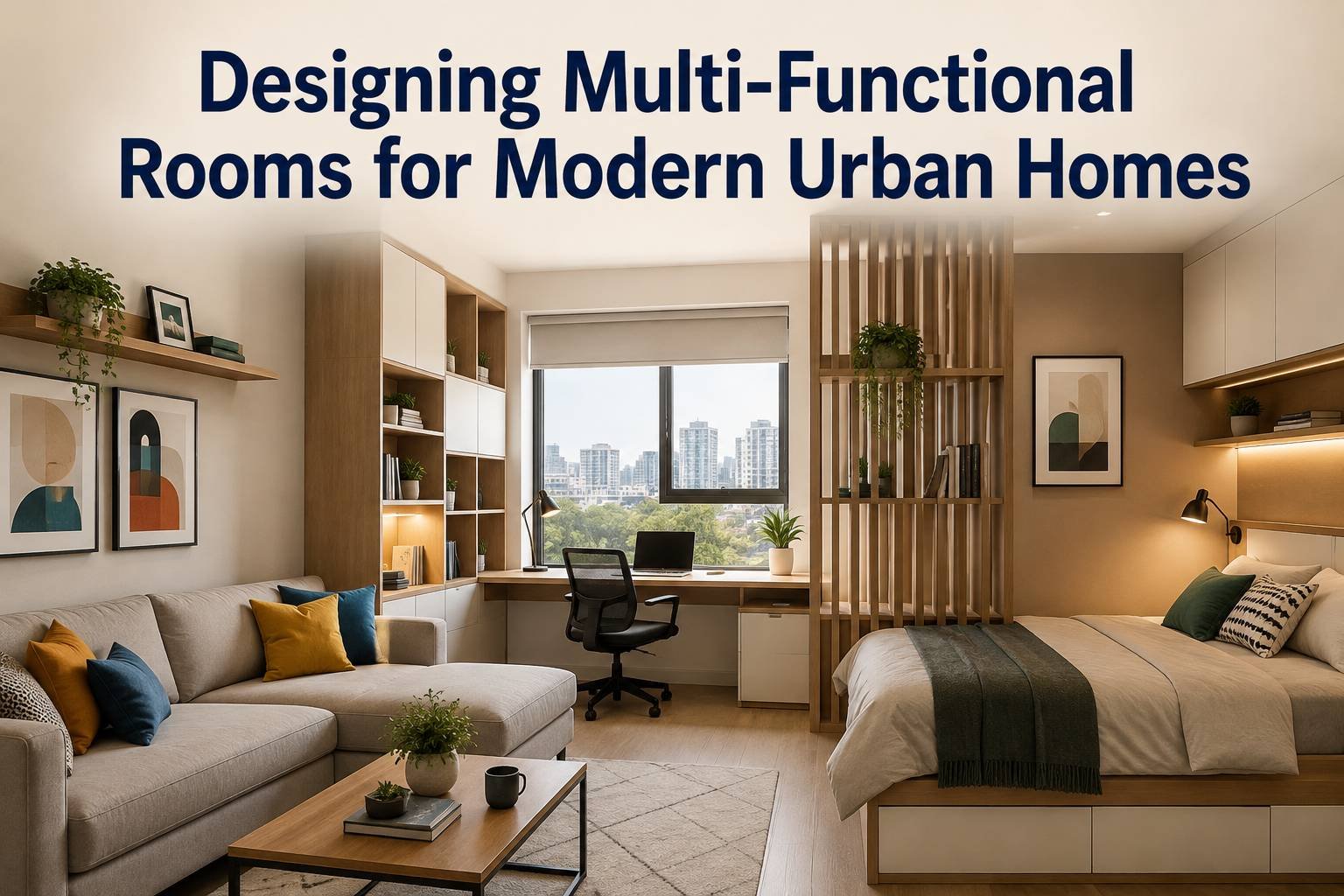
Modern urban homes often need to support multiple activities within limited square footage. A living room can serve as a lounge, working place, entertainment room, and a guest room. Through careful design, homeowners can design spaces that can be adjusted during the day without being crammed or losing style.
An interior designer in delhi can help homeowners understand how furniture placement, storage, lighting, and zoning can work together. The goal is to make a home where no space is wasted and yet comfortable and aesthetically balanced.
Before selecting furniture or decorative elements, identify everything the room needs to accommodate. Think about the utilization of the space in the mornings, working days, evenings, and weekends.
The clear knowledge of these activities assists in deciding on which functions should be allocated special areas. It also eliminates the waste of valuable floor space by unnecessary furniture.
A multi-purpose room does not necessarily require fixed walls to divide various activities. Individual zones can be visually created by the use of rugs, lighting, furniture placement, shelving, and color changes.
As an example, one side of a living room can be used to support remote work and another one can be devoted to relaxation. Maintaining these spaces visually relates enables the room to seem spacious and unified.
Furniture is particularly crucial when every square foot counts. Multifunctional furniture can enable homeowners to make better use of the small space and maintain the order in the room.
A sofa bed can be used to offer a sleeping space to the guests and a storage ottoman can be used as a seating area and storage. Dining tables and foldable desks are also extendable and can be changed according to the daily needs.
Clutter will easily reduce the size of a small room and render it less useful. Combined storage is a convenient means of storing items in order without making the space look heavy.
An interior designer delhi ncr can include hidden cabinets, floating shelves, storage benches, and built-in wardrobes into the design. Storage that is integrated with the architecture of the room becomes useful and aesthetically discreet.
Lighting can entirely transform the experience of a multi-functional room and its functionality. A mix of ambient, task, and accent lighting enables various zones to be used in different ways.
A work desk might require concentrated light, and a more diffused light can be used to produce a calming evening atmosphere. The fixtures can also be adjusted to make the room change its mood during the day.
A multi-purpose room must never be hard to move around in. The furniture should not be placed in a way that limits movement and even a relatively large room may seem small.
Open crucial routes and place bigger pieces strategically in the room. Clear circulation is essential to enhance comfort and make sure that every zone can be utilized without disrupting another.
Furniture that can be converted is especially helpful in city houses where the rooms have to switch their purpose during the day. A dining table may be used as a temporary working table, and a wall-mounted desk may be folded up at the end of the working day.
An interior designer in delhi ncr can recommend flexible solutions based on room dimensions, household needs, and lifestyle patterns. Flexible design minimizes the necessity of significant changes as the requirements change.
Multi-purpose rooms may be disorganized when each area is designed in a totally different fashion. The repetition of colors, materials, textures, and finishes brings about a feeling of continuity.
The personalities of different areas can still be differentiated by means of artwork, accessories, and lighting. Having a consistent design language will enable the room to look coherent and not disjointed.
Compact spaces can be made to look open through visual strategies. Mirrors, light colors, glass surfaces, and thin-profile furniture minimize the visual weight and enhance the feeling of spaciousness.
Natural light also plays an important role. It is possible to keep windows clear and reflective surfaces to spread daylight and make multi-functional rooms look brighter.
A room that is created based on the current needs can become less useful as the circumstances evolve. Work schedules, family needs, leisure, and day to day activities may change.
An interior designer delhi can assist in designing layouts that are flexible as such changes take place. The ability to plan in advance can minimize the expensive redesigns and enhance the long-term utility of the home.
Being functional does not imply compromising personal style. A practical room can be made warm and welcoming with artwork, plants, photographs, textiles and well-chosen decorative objects.
Select significant items instead of covering all the available surfaces. Considerate decoration brings character without sacrificing the clean and organized look required in a multi-purpose area.
Neglected spaces can be turned into useful resources in small city houses. Uncomfortable spaces can be turned into reading nooks, blank wall spaces can be used to store things, and window spaces can be used as small workstations.
An interior designer delhi ncr can see opportunities that the homeowners might not see themselves. Space planning is done with care to make sure that each section of the room is useful in terms of comfort, functionality, or storage.
Multi-functional rooms need to be designed with a balance between flexibility, organization, comfort, and personal style. Integrated storage, smart furniture, layered lighting, clear circulation, and flexible layouts enable the same space to accommodate multiple activities without being crowded. Modern urban homes can be more efficient and enjoyable with careful planning and yet be aesthetically harmonious. Multi-functional interiors are not merely designed to save space, but they are designed to make life easier.