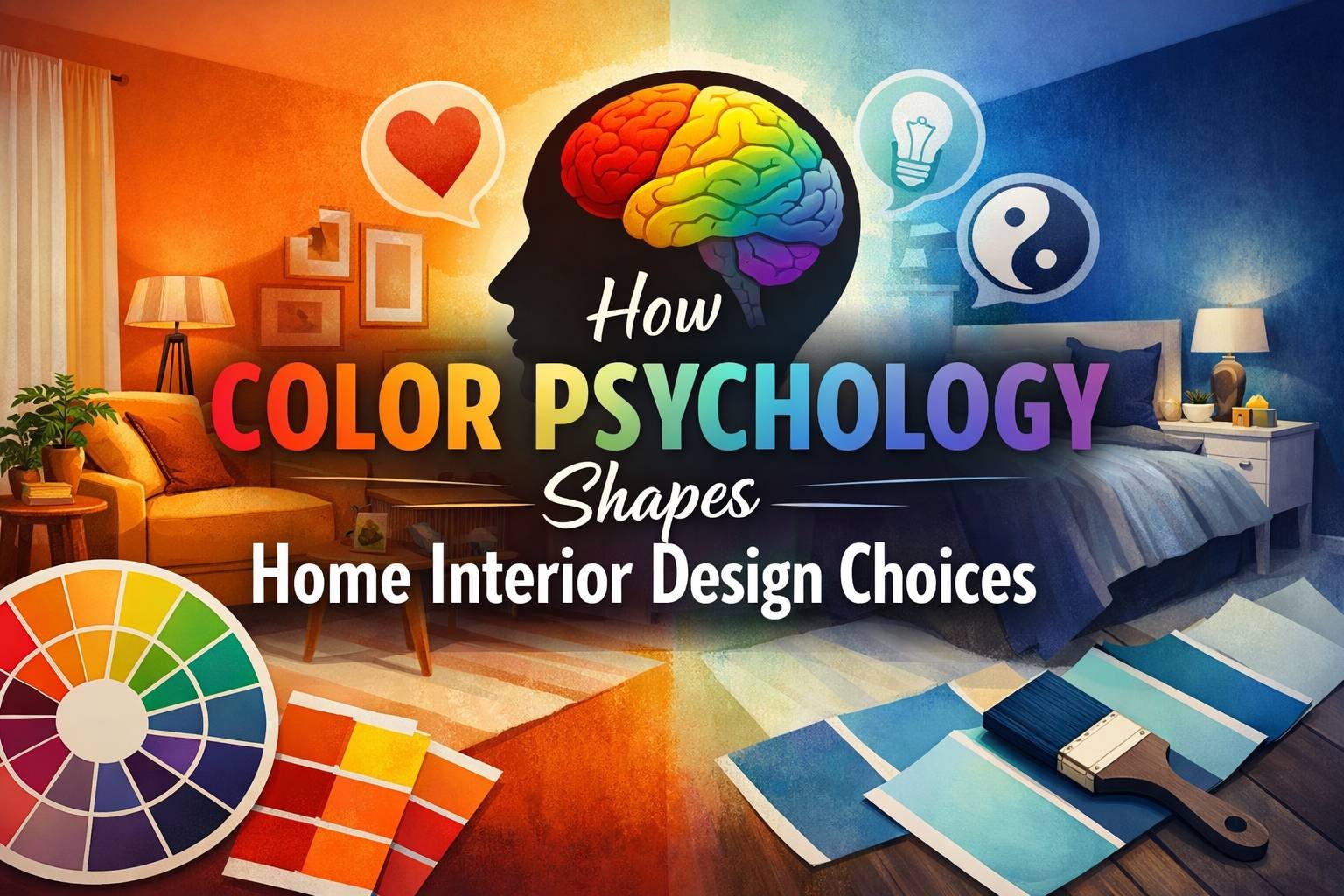
One of the strongest aspects of home interior design is color. It silently affects emotions, behavior and even the level of comfort in everyday life. Whether it is making a relaxing bedroom or a dynamic living room, the correct color can entirely change the mood and the functionality of a room. Color psychology comes in here. Knowing the influence of various colors on the human mind enables homeowners to make wiser choices in design. Most homeowners nowadays seek the advice of a professional interior designer delhi ncr to make sure that their color scheme is in line with not only beauty but also with their emotional state.
Color psychology is the effect of various colors on human feelings, perception, and moods. This concept is applicable in home interior design, where the designers can choose the shades that will support the role of each room. As an example, calming colors will make a person feel relaxed, whereas bright colors will inspire creativity and vitality.
A professional interior designer in delhi ncr does not just learn about color theory, but also about lighting, room size and lifestyle requirements. The psychology of colors does not mean being a follower of the fashionable color scheme; it is a matter of establishing harmony between the aesthetic value and the comfort of the mind. Its proper usage will improve functionality and emotional balance in a home.
Warm colors like red, orange and yellow are considered to be energetic and welcoming. These colors are warm, exciting and social, hence suitable in living rooms, dining rooms and kitchens.
Red may help to trigger appetite and conversation, and orange may promote creativity and enthusiasm. Yellow is bright and positive but it must be used sparingly to prevent visual overload. A good interior designer delhi will tend to apply warm colors in the form of accent colors to avoid overloading the space without losing the vibrant and warm effect.
Blue, green, and purple are cool colors that are related to calmness, relaxation, and clarity of mind. The colors are ideal in bedrooms, bathrooms, and meditation rooms where peace is required.
Blue is a peaceful color and enhances the quality of sleep, and green is the symbol of balance and closeness to nature. When used in a subtle manner, purple is elegant and creative. To ensure that the room is very welcoming and relaxing, a professional interior designer in delhi takes the time to balance cool colors with natural light so that the rooms do not feel cold or dull.
Most interior designs are based on neutral colors, including white, beige, gray, and taupe. They offer versatility, timelessness, and visual symmetry. Neutrals serve as a backdrop to the furniture, artwork, and other elements of the decor to shine.
Neutral palettes are also a common feature of modern houses that help to make the homes look open and elegant. A reputable interior designer delhi ncr incorporates textures and slight shades in the neutral schemes to ensure that interiors are not flat and monotonous.
The living room is a social area and therefore colors must promote comfort and discussion. The use of warm neutrals, soft yellows or dull earth tones provides a comfortable and balanced atmosphere. The accent colors will provide a personality without too much crowding of the space.
Bedrooms should be painted with colors that are relaxing. Cool colors such as blue, green, or lavender can reduce stress and allow a person to sleep better. Do not use too bright or vivid colors, which may interfere with mental relaxation.
The kitchen benefits from energizing and stimulating colors. Warm colors like yellow, soft red or terracotta have the effect of increasing appetite and positivity. These colors make the space not too overwhelming when combined with neutral cabinetry.
The best colors to use in bathrooms are those that are relaxing and clean. Soft blues, greens, or whites make the atmosphere of a spa and make it more relaxing. These colors also help to create a sense of openness and freshness in smaller bathrooms.
A home office needs colors that enhance concentration and efficiency. Blue helps in focus and green helps in alleviating eye pressure during extended working hours. Subtle color accents in neutral bases contribute to clarity, without distracting.
Selecting the appropriate color combinations is equally important as the choice of single colors. The complementary colors are contrasting and energetic, whereas analogous colors provide harmony and fluid movement between spaces.
The 60-30-10 rule will keep the balance, i.e., 60% of the dominant color, 30% of the secondary shade, and 10% of the accent color. An interior designer delhi makes sure that the color combinations are consistent all over the house and at the same time each room has its identity.
The excessive use of bold or bright colors may make a space look visually disorganized and overwhelming. It does not create harmony but distracts the eye and leads to mental fatigue. Bold shades are better used as accents but not the dominant color on the walls.
The colors vary radically with varying lighting conditions during the day. A color that seems ideal in a showroom can be drab or harsh at home. Not testing colors in various lighting conditions usually results in frustrating final results.
Trendy colors may look appealing online but may not suit your lifestyle or emotional needs. Choosing colors only because they are popular can make interiors feel impersonal. Personal comfort and long-term usability should always guide color decisions.
Skipping paint sample testing is a common and costly mistake. Wall size, texture, and surrounding décor influence how a color appears. Testing small patches helps avoid mismatched tones and ensures visual consistency throughout the space.
Color psychology is a powerful tool that shapes how we experience our homes emotionally and visually. From boosting relaxation to enhancing energy, the right colors can significantly improve daily living. Thoughtful color selection creates harmony, balance, and purpose in every room. By understanding color psychology and working with professionals when needed, homeowners can design interiors that are not only beautiful but also emotionally enriching.