How to Create Privacy Without Making Your Home Feel Closed Off
A comfortable home requires privacy, and this does not imply that all the rooms should be enclosed with concrete walls. Modern homeowners increasingly want spaces that feel open, bright, and connected while still offering moments of quiet and seclusion. This balance can be achieved with the help of smart interior planning, flexible layouts, and subtle visual boundaries.
An interior designer in delhi can help homeowners design private areas without sacrificing natural light or spaciousness. It should be more about establishing distance that is purposeful but still letting various sections of the house be visually connected.
Use Open Partitions Strategically
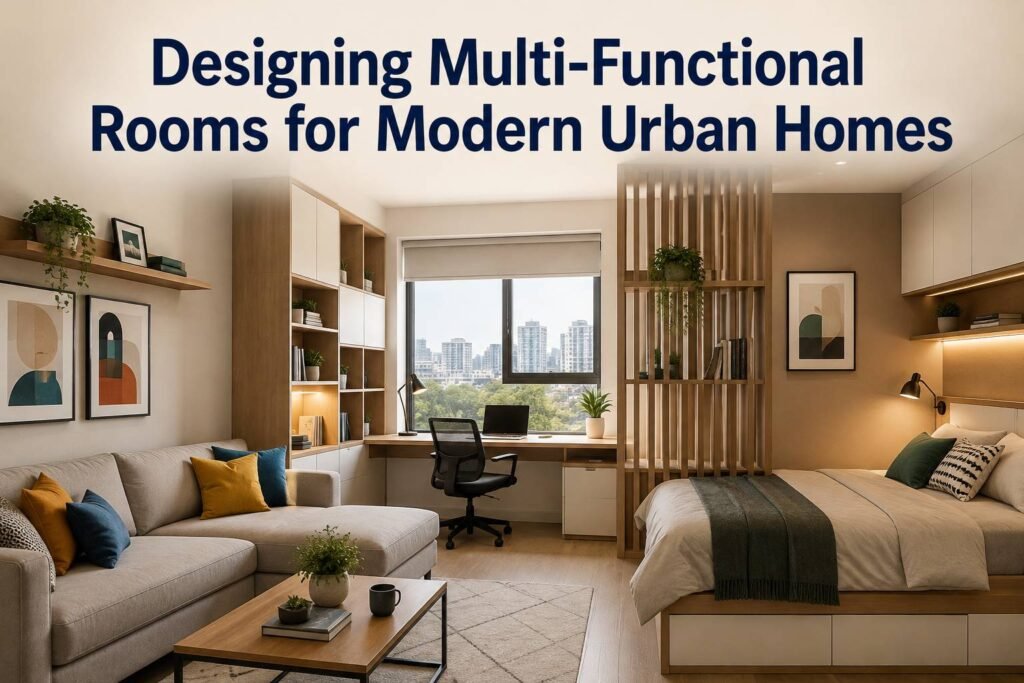
Open partitions can create a sense of privacy without completely dividing a room. Light and air can pass through spaces using slatted wood screens, decorative metal frames, open shelving, and partial dividers.
These solutions work particularly well between living and dining areas, entryways, and home offices. They create visual borders and keep the openness that makes modern interiors spacious.
Choose Flexible Window Treatments
One of the easiest methods of managing privacy during the day is through the use of curtains. Light fabrics are able to blur exterior appearances and at the same time, allow daylight to penetrate the interior, whilst heavier curtains offer more privacy when needed.
Layered window treatments also add texture and sophistication to interiors. By choosing fabrics that match the colors and furniture that are already present, the privacy solutions will become part of the overall design.
Add Frosted or Textured Glass
Frosted and textured glass can provide privacy without blocking natural light. An interior designer delhi ncr can suggest the use of ribbed glass, etched panels, or lightly tinted surfaces in the bathrooms, bedrooms, study areas, and internal partitions.
These materials are particularly handy in smaller houses where solid walls may make a room look tight. They establish a visual distance without losing brightness and a feeling of openness.
Use Furniture as a Privacy Tool
Furniture may establish unobtrusive boundaries without the need to be built in. Sofas, tall bookcases, cabinets and consoles may separate spaces and still be useful.
Placing a sofa in between a living area and a workspace, e.g., can provide a visual barrier without disrupting movement. This is especially useful in open-plan houses that have small floor areas.
Bring Nature Into Privacy Planning
Plants can be used by an interior designer in delhi ncr to provide natural screening between various spaces. Indoor plants of various sizes, stacked pots, and greenery can be placed vertically to block direct sightlines and provide a sense of warmth and softness.
Plants also assist in the breaking up of large open spaces without the introduction of heavy architectural features. This is particularly convenient to busy urban households by selecting low-maintenance varieties.
Use Lighting to Create Private Zones
Lighting can also affect the openness or intimacy of a room. General lighting is brighter, and the space looks more open, whereas more comfortable spaces can be formed with softer layered lighting, where people can relax and do their quiet activities.
Various areas in a single room can be characterized by pendant lights, floor lamps, wall sconces, and table lamps. Adjustable lighting provides the homeowners with greater control over the ambiance during the day.
Install Sliding or Folding Dividers
Sliding and folding partitions are the best where privacy is required at specific times. They may be open when there are normal activities and close when homeowners require separation.
An interior designer delhi can integrate wooden panels, glass sliders, or folding screens into bedrooms, workspaces, and multifunctional areas. Their versatility enables them to be applied in homes that have to change during the day.
Consider Sound Privacy Too
Privacy is not only visual. Comfort can also be influenced by noise especially when bedrooms, workspaces, and entertainment areas are located near each other.
Sound transfer can be minimized with the use of soft furnishings, rugs, heavy curtains, upholstered panels, and acoustic materials. Integration of visual and acoustic strategies will provide a more serene environment without necessarily isolating rooms.
Make Privacy Feel Intentional
Privacy solutions must resemble an extension of the original interior instead of something that is added on. The repetition of materials, colors, and textures in partitions, furniture, and decoration assists in the establishment of visual consistency.
Careful planning also means that privacy features will not disrupt circulation, storage, or daily operations. The outcome is a home that is thoughtful, cozy and naturally arranged.
Conclusion
To provide privacy without closing off a home, there must be a careful balance between isolation and openness. Open partitions, movable curtains, textured glass, strategic furniture arrangement, greenery, layered lighting, and movable partitions can all be used to establish personal spaces without sacrificing natural lighting and space.
The idea is not to shut off rooms but to provide each area with the appropriate degree of privacy to its use. Modern homes can be bright, connected, comfortable, and truly private with smart planning.
Ready for clearer vision? Book your appointment today with our expert eye care team!