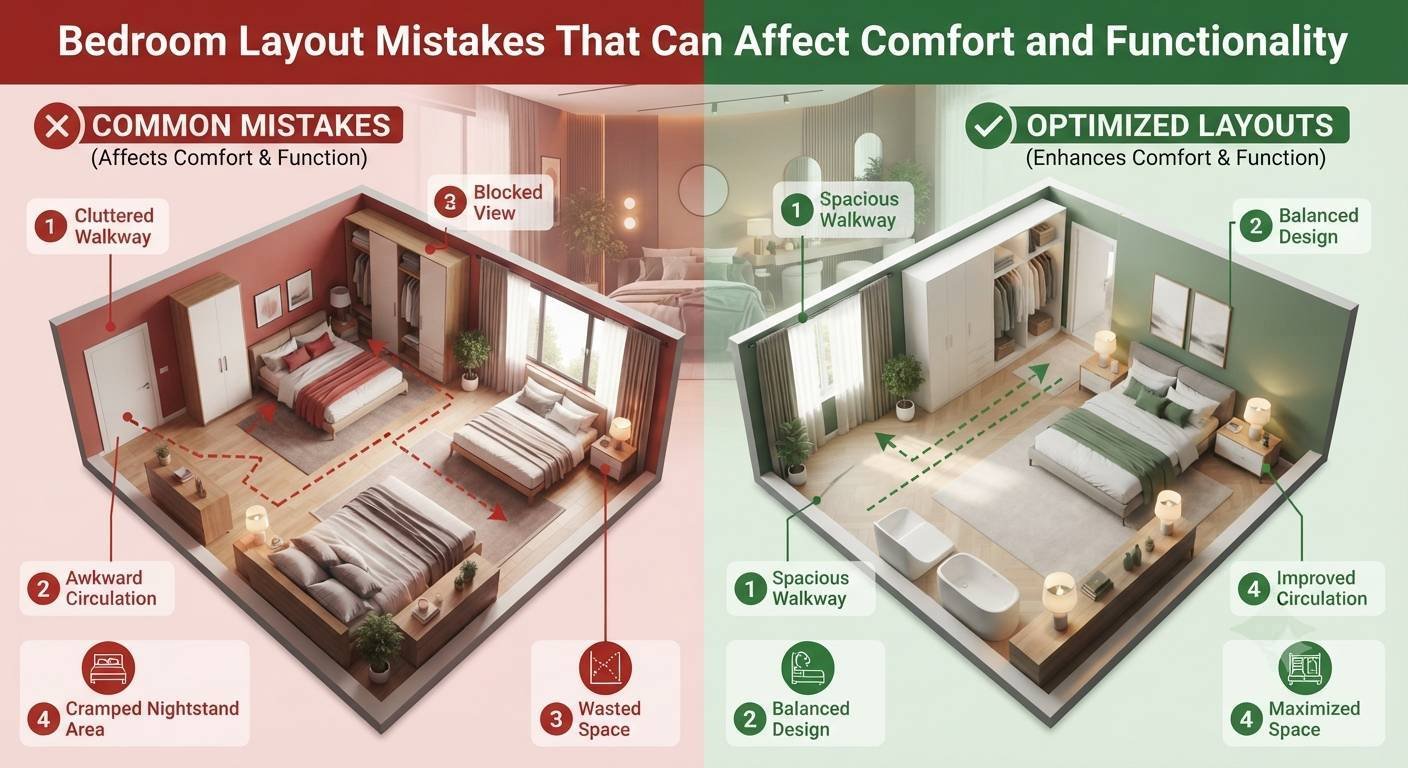
Bedroom Layout Mistakes That Can Affect Comfort and Functionality
A bedroom should feel comfortable, peaceful, and easy to use at any time of day. But even beautiful bedrooms may turn out to be frustrating when the furniture is not placed properly, there is not enough storage, or movement paths are obstructed. The choice of layout affects your ease of getting ready, relaxing, sleeping, and organizing your possessions.
An interior designer in delhi can help identify layout issues before they affect everyday comfort. The aim is to design a bedroom where furniture, lighting, storage and circulation co-exist rather than fight over the scarce space.
1. Pushing Everything Against the Walls
Most homeowners instinctively push all furniture to the wall since they think that this will give them more open space on the floor. Nevertheless, this method may occasionally make the room feel out of place and the layout look unbalanced.
The bed is generally supposed to be the main anchor of the room. It can then be surrounded by other furniture to provide clear relationships between sleeping, dressing and storage areas.
2. Choosing Furniture That Is Too Large
An interior designer delhi ncr can help prevent one of the most common bedroom mistakes: selecting furniture based on appearance rather than room proportions. A large bed, wardrobe, or dresser can easily dominate a small bedroom.
Before purchasing furniture, measure doorways, wall lengths, ceiling height, and available walking space. Choosing appropriately scaled pieces helps maintain comfortable circulation and prevents the room from feeling overcrowded.
3. Blocking Natural Light
The natural light may affect the level of spaciousness and comfort in a bedroom. When tall wardrobes, cabinets, or other large decorative items are placed directly in front of windows, they can decrease the amount of daylight and make the room seem darker.
Open up window spaces as much as possible and use light curtains where feasible. Considerate placement of furniture can save daylight and at the same time offer the privacy required to have a good sleep in the bedroom.
4. Ignoring Walking Paths
A bedroom should have sufficient clearance so that individuals can move freely between the bed, wardrobe, bathroom and entrance. Simple morning routines can be made frustratingly complicated by narrow pathways.
An interior designer in delhi ncr can plan circulation before furniture is finalized, ensuring that major movement routes remain clear. This is particularly critical in shared bedrooms where two individuals might be required to move concurrently.
5. Creating Insufficient Storage
Storage issues can easily impact functionality and relaxation. The bedroom can start to feel cluttered when clothing, accessories, books, or personal items are visible due to the lack of storage.
Install wardrobes, bedside drawers, under-bed storage, and built-in solutions based on your real possessions. Storage must also be in a place where the items can be most conveniently accessed, not just where an empty wall is located.
6. Placing the Bed Without Considering the Room
The bed is normally the biggest and most significant furniture in the bedroom and therefore its placement influences all the other items. When it is not placed in the right position, it may cause poor circulation or cause the room to appear unbalanced.
Whenever possible, position the bed so that it feels visually anchored rather than squeezed into an inconvenient corner. Take into account window views, doors, lighting, and bedside storage access before making the final decision.
7. Using Only One Light Source
One ceiling light is hardly sufficient to support a contemporary bedroom. Bright overhead lighting can be useful in cleaning or organizing, but it can be unpleasant on evenings or before bedtime.
Ceiling fixtures, bedside lamps, wall sconces, and accent lights can be used by an interior designer delhi to create layered lighting. The bedroom can support reading, dressing, relaxing and winding down by having different levels of lighting.
8. Overloading the Room With Decor
Decorative items can personalize a bedroom, but too many accessories can interfere with comfort. Too much furniture, cushions, artwork and ornaments can decrease the amount of usable space and complicate cleaning.
Select a few significant pieces and leave enough visual breathing space around them. Less cluttered space tends to make the bedroom more relaxed and allows the key design features to shine.
9. Ignoring Door and Wardrobe Clearance
Wardrobe doors, drawers, bedroom doors, and bathroom doors should have sufficient space to open freely. Ignoring such clearances may cause everyday frustrations and make the space appear unnecessarily narrow.
Sliding wardrobes may be helpful in small bedrooms where swing doors take excessive space. Proper planning will make sure that doors can swing without getting in the way of beds, dressers, and other furniture.
Conclusion
A comfortable bedroom depends on much more than attractive furniture and stylish finishes. Ineffective proportions, obstructed routes, ineffective storage, insufficient light, and neglected practical considerations can all decrease comfort and functionality. Thoughtful guidance from an experienced interior designer in delhi ncr can also help transform awkward layouts into practical spaces that support better everyday living.
Ready for clearer vision? Book your appointment today with our expert eye care team!